
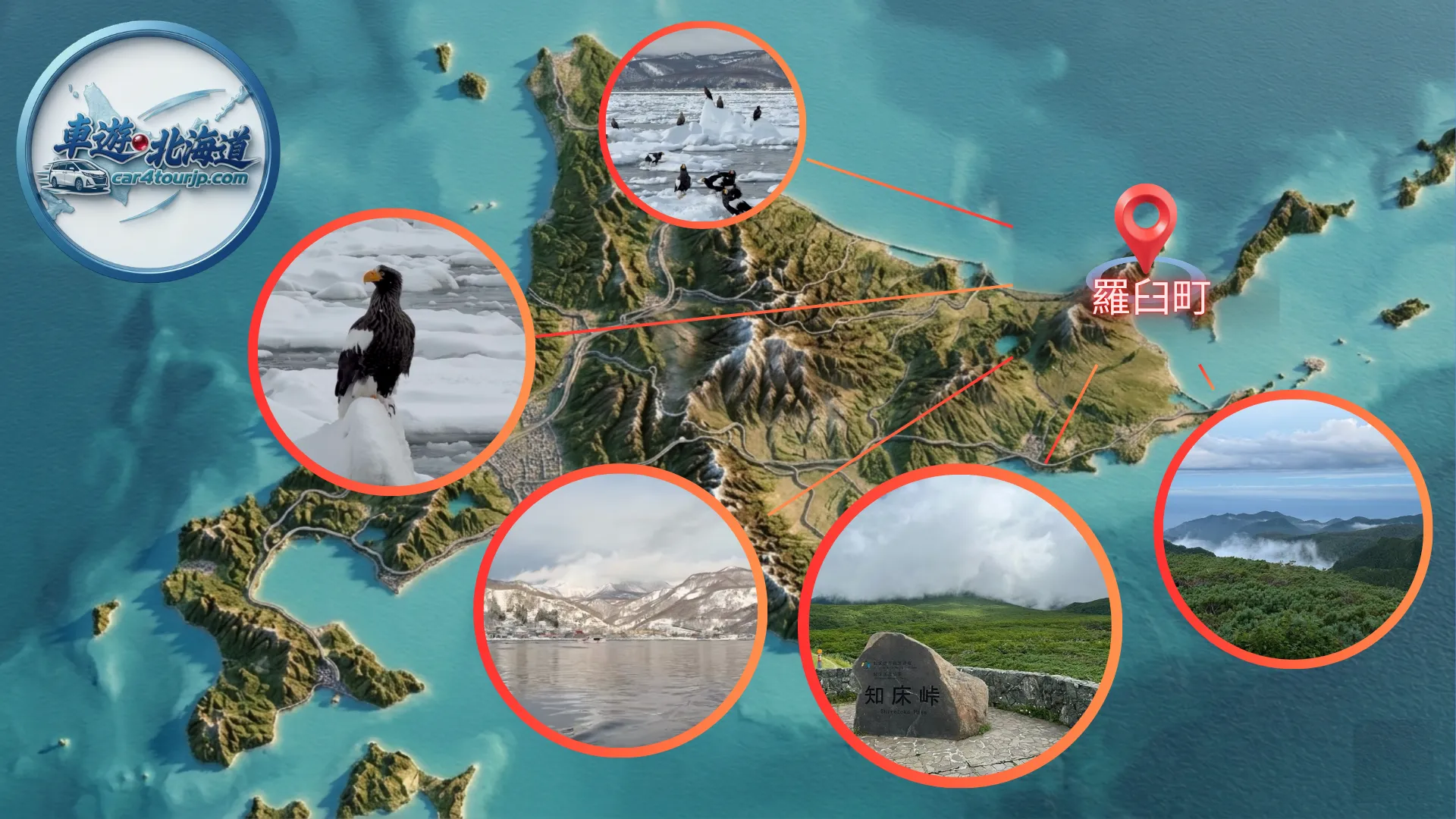
Rausu is the ultimate destination for nature enthusiasts, located on the rugged eastern coast of the Shiretoko Peninsula. This UNESCO World Heritage site is a global hotspot for marine life and rare birds. From summer Whale Watching (Sperm Whales and Orcas) to winter Steller’s Sea Eagle photography on the drift ice, Rausu offers raw, powerful encounters with nature. With a Rausu private car tour, you can navigate the dramatic Shiretoko Pass and visit hidden seaside hot springs in comfort, avoiding the challenges of extremely limited public transport in this remote frontier.
Plan Your Rausu Wilderness Expedition: Marine Life & Gourmet Guides
Before booking your Rausu private car service, explore our local insights. Whether you are looking for the best photography cruise or want to try the world-renowned Rausu Kelp (Kombu) cuisine, we help you plan a Rausu customized itinerary for the edge of the world.


- Eastern Hokkaido Private Charter Day 8: Shiroi Koibito Park & Private Airport Transfer

- Eastern Hokkaido Private Charter Day 7: Biei Rainbow Flower Fields, Farm Tomita & Ningle Terrace to Sapporo
- Eastern Hokkaido Private Charter Day 6: Kitami Fox Village to Biei Blue Pond & Shirahige Waterfall

- Eastern Hokkaido Private Charter Day 5: Shiretoko Five Lakes & Abashiri Coastal Wonders


Why Choose a Private Car for Rausu?
- Direct Access from Airports: Rausu is far from major cities. A private car is the most reliable way to travel directly from Nakashibetsu Airport or Kushiro, ensuring you make it in time for your early morning cruise.
- Navigate the Shiretoko Pass with Ease: The road between Utoro and Rausu (Shiretoko Pass) is breathtaking but steep and often closed in winter. Our professional drivers ensure a safe journey with the best views of Mt. Rausu.
- Explore Hidden Hot Springs: Rausu is home to unique “wild” onsens like Kuma-no-yu (Bear’s Hot Spring) and the seaside Seseki Onsen. These gems are inaccessible by bus, but our private car takes you right to the entrance.
✨ Exclusive Bonus for Your Private Tour:
The beauty of Hokkaido goes beyond the famous landmarks. To make your journey more heartfelt, we’ve prepared a list of “Hidden Gems” tucked away within our classic itineraries.
🔒 How to Unlock Your Secret Map?
Simply complete your booking to instantly unlock these hidden spots. We will send you a personalized custom itinerary, ensuring your Hokkaido memories are truly one-of-a-kind.
Contact Us for a Free Custom Hokkaido Private Car Charter Quote
Seasonal Packing Guide for Rausu
| Season | Months | Average Temp | Outfit Recommendations & Tips |
|---|---|---|---|
| Spring | May – Jun | 5°C ~ 14°C | Late Spring. The Shiretoko Pass usually opens in late May. It remains very cold. A windproof jacket and fleece layers are essential. |
| Summer | Jul – Aug | 15°C ~ 22°C | Cool & Maritime. Ideal for whale watching. Wear long sleeves and bring a windbreaker, as the temperature on the boat is much lower than on land. |
| Autumn | Sep – Oct | 7°C ~ 17°C | Salmon Run Season. The air is crisp. A warm coat and scarf are recommended for viewing salmon climbing the rivers or autumn foliage. |
| Winter | Nov – Apr | -10°C ~ 1°C | Extreme Sub-zero Cold. Mandatory for eagle photography. High-quality heavy down coats, thermal base layers, and waterproof boots are vital. |
- Boat Cruise Preparation:
Rausu’s cruises go out into the deep waters of the Nemuro Strait. Even in summer, the wind on the ocean is piercing. We recommend wearing windproof outerwear and polarized sunglasses to better spot the blow of a whale or the glisten of drift ice. - The “Rausu Kelp” Souvenir:
Rausu produces the most expensive and flavorful kelp (Kombu) in Japan. Our private cars have plenty of space for you to stock up on this premium local specialty at the Rausu Michi-no-Eki (Roadside Station). - Wildlife Etiquette (Brown Bears):
Rausu has one of the highest densities of brown bears. While our private car provides a safe viewing platform, please follow your driver’s instructions—never feed the animals and always keep a safe distance for photography.

- Temperature
- Precipitation
- Rain Chance
- Wind
- Humidity
- Pressure
